See what's yours to see.
Your scans. Your measurements. Your understanding.
The first on-device imaging intelligence platform that puts 3D tumor reconstruction and quantitative tracking entirely in the patient's hands.
Today, a cancer patient receives a radiology report — a wall of jargon, a single longest-diameter measurement, and perhaps a flat grayscale image on a portal they don't control. That's the entirety of what most patients ever see of their own imaging.
The data inside your MRI is extraordinarily rich — volumetric, spatial, dimensional. But by the time it reaches you, it has been compressed into a sentence. You are given a caption when you own the photograph.
LeptonX-Ray Vision restores what was always yours. It takes your DICOM imaging data, reconstructs it in three-dimensional space, segments your anatomy with research-grade AI, and lets you see — truly see — what is happening inside your own body. On your device. Under your control. With no data leaving your hands.
Every time a doctor delivers news about your body — a diagnosis, a finding, a recommended procedure — there is an invisible translation layer between their knowledge and yours. You receive words where you need images. You receive abstractions where you need structure.
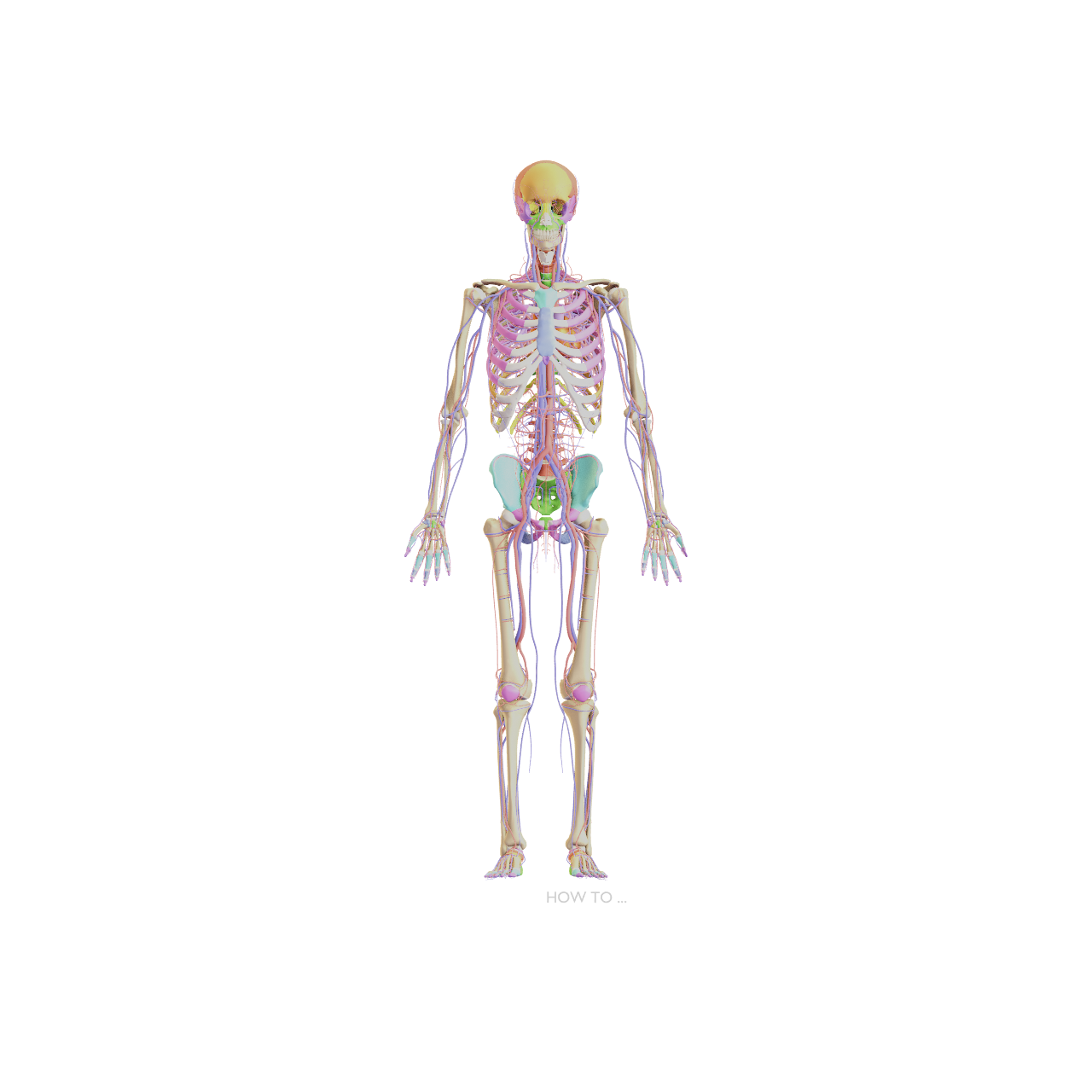
Maya's Anatomical Intelligence closes that gap permanently. When your physician tells you there is a finding near your iliac artery, Maya doesn't just explain it — she takes you there. The 3D model responds to your voice, flies to the exact structure, and surfaces everything your health record says about it.
This is not information retrieval. This is comprehension — personalized, private, and immediate.
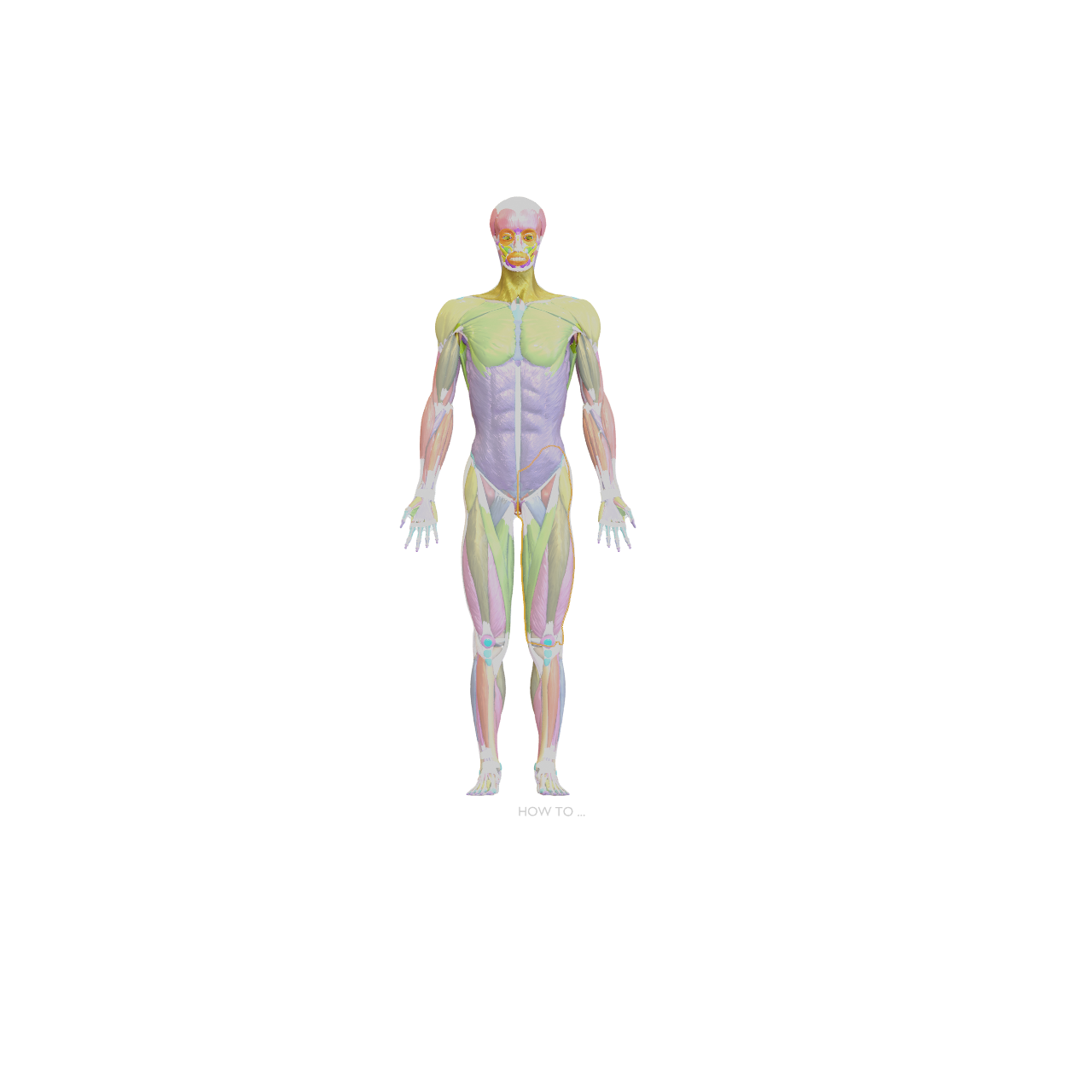
Maya maps muscular anatomy directly to surgical reports, physical therapy notes, and imaging findings from your health record. When your orthopedist documents a rotator cuff finding, Maya shows you exactly where it is — in three dimensions.
650+ named muscles. Every attachment, every action, every clinical implication — cross-referenced against what your doctors have documented about your specific body.
Connect via secure FHIR integration, or load DICOM files from a CD, USB, or portal download. Your raw imaging data arrives on your device and stays there.
Research-grade neural networks analyze your scan entirely on-device. They identify organs, vessels, bones, and lesions, producing precise three-dimensional masks of every relevant structure.
Segmented structures become high-fidelity polygon meshes — smoothed, measured, and rendered against anatomically accurate organ models.
Volume. Longest diameter. Distance to critical structures. Every number derived from your scan, computed independently, tracked across every scan you've ever had.
Maya narrates what you're seeing in plain language — guiding you through the 3D scene, explaining measurements, and highlighting changes from previous scans.
Every scan session is versioned. Volume deltas, dimensional trends, and treatment response — tracked over months and years with clinical precision.
See exactly where a mass sits relative to the organ it occupies — its proximity to vessels and ducts, its relationship to surgical margins. Not described. Shown.
True 3D volume computation captures irregular shapes, asymmetric growth, and response patterns that flat measurements miss entirely.
Overlay meshes from different timepoints. See growth and shrinkage color-coded in three dimensions — not from a number, from a shape.
Maya narrates the reconstruction — identifying structures, reading measurements, comparing to prior scans in language you understand.
Dimensional annotations and margin measurements rendered directly in the 3D scene — spatial information anchored to anatomy.
Run your own quantitative analysis. Arrive at your appointments with understanding, not just anxiety.
A beautiful 3D rendering of an inaccurate segmentation is not a medical tool — it's a liability. LeptonX-Ray Vision is held to the LeptonX Imaging Fidelity Standard, validated against expert-annotated ground-truth datasets.
Every segmentation model is validated against the Medical Segmentation Decathlon and published clinical datasets. We report our error margins. We do not ship capability without a published accuracy number.
We lead with precision, not with flair. If we can't prove the number, we don't show the number.
LeptonX-Ray Vision does not upload your imaging data to a cloud. It does not send your scans through a third-party API. Every computation — segmentation, mesh generation, measurement, narration — executes on your device.
This is not a privacy policy. It is an architectural fact. There is no server to breach because there is no server.
It was always your body.First Particles™ — LeptonX Health Intelligence
It was always your scan.
It was always your right to understand it.
LeptonX-Ray Vision is in active development as part of the LeptonX Sovereign platform.
LeptonX-Ray Vision is a patient comprehension and self-advocacy tool. It is not a diagnostic device and does not provide medical diagnoses, treatment recommendations, or clinical decision support. All imaging analysis should be discussed with your qualified healthcare provider.